The tooth enamel of your smile is the initial line of defense. It safeguards the sensitive layer beneath your teeth from damage, decay, and the effects of sensitivity. Although enamel is the most durable substance that is found in your body, it’s not impervious to damage.
Both can enhance your smile, but they work in different ways.
This article will explain what each does, who can receive them, how they’re administered, and how to care for them, so you can choose the best one for you.
Dental bonding is a multi-faceted cosmetic procedure that is cost-effective and solves various aesthetic issues. The procedure can be completed in just one visit and requires minimal preparation of the teeth, making it an excellent option for those seeking a fast and cost-effective way to enhance their smile.
Dental bonding can be durable, but it’s not as durable as other options for cosmetic enhancements and is susceptible to staining.
The procedure requires several appointments, which include dental preparation and bonding. Veneers are well-known for their strength and resistance to staining, making them an ideal choice. But, they require enamel from naturally occurring teeth to be removed.
You’re a good option for veneers when:
Dental bonding may be the best option for you if you’re suffering from the following characteristics:
Teeth bonding can serve multiple purposes. For instance, it could be used in medical and cosmetic procedures. Dental bonding can help improve the aesthetics of the teeth. It can also conceal exposed teeth, which can result from shrinking gums. In contrast to porcelain veneers, minimal or no preparation is required before the procedure.
Dental bonding doesn’t require removing enamel or sanding your teeth, making it less painful than porcelain veneers.
Have you realized that tooth bonding is also significantly quicker and cost-effective compared to veneers? Because it’s a simple treatment, your dentist can finish dental bonding in just one visit, which can be practical if you do not want to visit your dentist’s office several times.
You’ll be happy to learn that veneers are durable and can last for a long time with proper dental hygiene, making them a great cosmetic investment. With dental veneers, you can feel confident and show off your gorgeous smile time and again.
Depending on your smile goals, you may use veneers to disguise a damaged or discolored tooth. You can also use it to cover several teeth to give you a healthy, shining white that will not lose its shine.
The process of dental bonding and veneers can provide solutions to many cosmetic issues. They are used to:
Both procedures may produce similar results, but the choice between veneers and dental bonding typically depends on the individual’s needs, preferences, and budget. Dental bonding is ideal for minor changes and provides an easier, less invasive alternative. However, veneers can be used for more extensive cosmetic changes to your smile and have long-term effects.
Before getting dental bonding, it is vital to understand the process. Here’s a brief overview to help you make an informed decision.
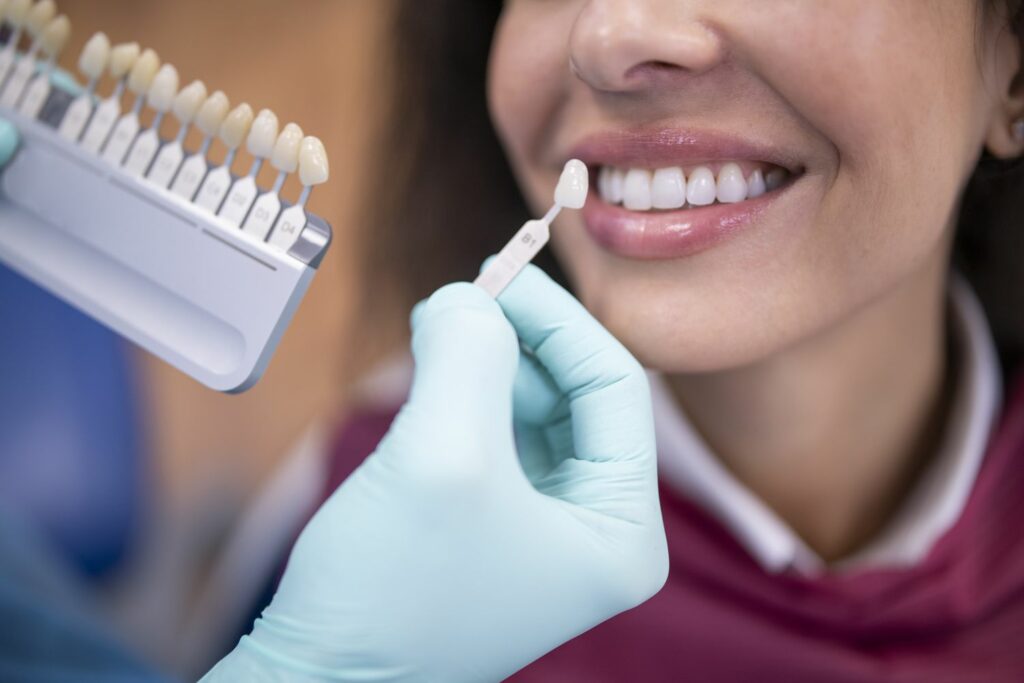
The first step to dental bonding is cleaning the tooth. Your dentist will use an opacity guide to select the resin composite that matches the shade of the natural tooth. The dentist will roughen the tooth’s surface and apply an aqueous conditioning solution. This helps bond the resin more effectively to the tooth.
The dentist then places the resin on the tooth and shapes it. Once the resin is in the correct form, a special light is applied to help harden it.
Finally, the bonded teeth are polished to give them a natural appearance.
If you decide to get veneers, there are typically several steps involved, including consultation, preparation, and placement. Here’s a quick description of the process for receiving your veneers:
They look for signs of tooth loss, cavities, gum disease, and the need for root canal therapy. If you are experiencing one of these issues, veneers may not be the best option for you.
If your dentist thinks you’re a good candidate for veneers, they may use a scanner to capture images of your teeth and dental software to simulate the final results. Based on the veneer, the dentist may need to remove a small amount of enamel from the surface to create room for the restoration.
However, low-prep veneers are offered to many patients requiring minimal enamel removal. After your teeth have been prepared, digital scans will be taken, and the design process begins.
The dentist will use the digital scans to design the porcelain veneers. Your cosmetic dentist will put the temporary porcelain veneer to safeguard your teeth until the lab completes the restoration.
When the veneers on your teeth are prepared, you can visit the dentist. The dentist will apply local anesthetics to the treatment area to ensure you are comfortable. The dentist will then remove the temporary veneers that have been placed. Your cosmetic dentist will carefully bond the porcelain veneers to your teeth.
If you’re satisfied with how the veneers feel and look, the dentist will refine your smile and then make the necessary adjustments to ensure your new smile is positioned naturally.
To avoid damage and stains, limit your consumption of staining drinks and foods, such as tea, coffee, and red wine. Also, beware of cigarettes. Beware of biting into things that are hard to avoid chipping. Even with the most careful care, veneers and dental bonds might require replacement or repair.
Veneers and tooth bonding are both similar treatments. Both are intended to enhance the appearance of the teeth.
Therefore, the choice of treatment will be contingent upon various factors, such as the specific circumstances and needs of your situation. It is recommended that you discuss your options with your dentist to create an individualized strategy.
Bonding usually lasts 3-10 years with proper care, depending on your habits and maintenance.
Veneers aren’t permanent but last 10-15 years. They require some tooth preparation, so replacement is needed eventually.
Both procedures are typically painless. Bonding requires minimal preparation, and veneers may cause slight discomfort during tooth shaping; however, anesthesia is typically used.
Yes, but avoid hard or sticky foods that can cause bonding issues and limit staining foods like coffee with veneers.
Costs vary by location and dentist. Bonding is generally less expensive per tooth than veneers, which can be more expensive due to the use of specialized materials and complex processes.